
English| EUR
Suggested for you
More currencies
Choose a language
Prickly Pear Cays sit six miles northwest of Anguilla's main shore, reachable only by private charter, shared catamaran or arranged shuttle boat. This guide maps the main departure points, compares vessel types, and walks through what each crossing includes so you can match logistics to budget and group size.
Quick answer
A prickly pear boat trip departs from Road Bay, Sandy Ground or Blowing Point, with most operators offering shared catamaran excursions, private charters or scheduled shuttle runs. Journey time ranges from twenty-five to forty minutes depending on vessel and sea conditions. Entry to the island itself is free; boat transportation fees are charged separately by each operator and typically include round-trip passage, with many catamaran charters bundling snorkel gear, bar service and beach setup.
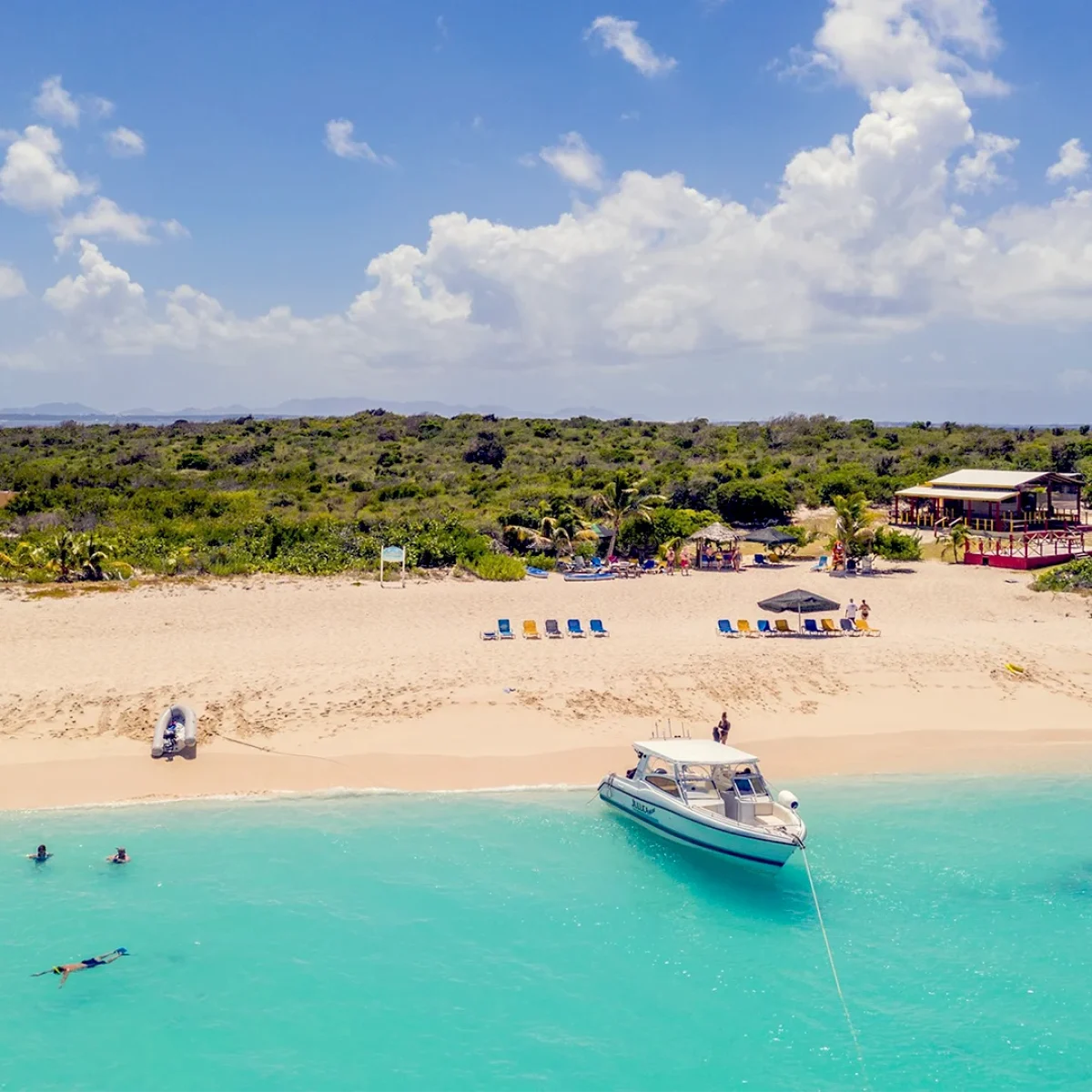
Prickly Pear Cays remain one of the few day-trip destinations in the eastern Caribbean still accessed exclusively by boat, with no pier, no scheduled public ferry, and no commercial jetty to receive larger craft. The twin uninhabited islets—Prickly Pear East and Prickly Pear West—float in shallow turquoise banks that shift with tide and season, forcing every operator to anchor offshore and tender passengers the final stretch in dinghies or by wade. Most visitors book passage on a shared catamaran excursion organized by one of Anguilla's established charter operators. These vessels depart mid-morning from Road Bay or Sandy Ground, carry between twenty and forty guests, and treat the crossing as the first act of a half-day or full-day program that weaves snorkeling stops, open-bar service, and beach landing into a single ticket. Private charters offer the same route on a faster timetable, with departure and return windows set by the group rather than a published schedule. A smaller number of independent water-taxi operators run scheduled shuttle runs for travelers who prefer to arrange their own beach day without the guided structure of a catamaran tour. The marine approach to Prickly Pear threads a narrow corridor through coral heads and sand bars visible as dark patches beneath the hull. Captains read the water by eye, adjusting course for draft and swell, and passengers often wade the last thirty feet from tender to shore because the seabed rises too quickly for a beached bow. That final wade—knee-deep over fine sand rippled by current—sets the tone for the island itself, where infrastructure ends at a single beach bar and a handful of palm-thatch shelters. Operators differ not only in vessel type but in what the ticket includes beyond the passage itself. Some catamaaran charters bundle snorkel equipment, rum punch, grilled lunch and guide narration into a flat per-person rate. Others charge only for the crossing and leave provisions to the passenger. The distinction matters for budget planning, especially for groups, where a private charter's upfront cost can fall below the per-head rate of a shared excursion once six or more passengers split the fee. Reviewing what each prickly pear boat trip includes—and what it leaves out—prevents surprise charges at the dock and ensures the logistics align with how you intend to spend the day once the anchor drops.
“The marine approach threads a narrow corridor through coral heads visible as dark patches beneath the hull, with captains reading the water by eye and adjusting course for draft and swell.”
The best arrival window for a boat trip to Prickly Pear Cays is 09:00–11:00. Arriving during this period allows visitors to secure prime beach spots before the peak afternoon crowds arrive from day-trip catamarans.
Dry, 75°F–82°F. Peak tourism season with consistent trade winds.
Best conditions for snorkeling and clear water visibility. Early arrival is essential due to high visitor demand.
Warm, 80°F–86°F. Transition period with fewer international visitors.
Ideal for those preferring quieter beaches and manageable crowd sizes.
Hot, 82°F–89°F. Hurricane season with higher humidity.
Very low visitor numbers allow for a peaceful experience if sea conditions remain calm.
—
Arriving at 09:00 avoids the surge of weekend excursion groups and ensures the most beach space.
Verdict: The optimal timeframe is Tuesday to Thursday mornings, arriving between 09:00 and 11:00, particularly during the shoulder months of May or November.
The Prickly Pear Cays are located off the northern coast of Anguilla and are accessible exclusively by water. Visitors typically depart from designated boat charter hubs on the main island to reach these uninhabited islands.
Private charter from Sandy Ground
Group catamaran from Blowing Point
Small water taxi from Shoal Bay
Coordinate with your chosen boat operator in advance to confirm your departure point, as docks vary by charter company. Ensure your vessel is secured before heading to the departure pier.
Prickly Pear Cays are open daily to visitors throughout the week. Operational hours remain consistent from Monday through Sunday.
There are no entrance fees to access the Prickly Pear Cays. All costs associated with a trip to the island are related to boat transportation services.
Verdict: You will pay 0 USD for island entry, while your total cost will depend entirely on the specific boat operator or catamaran service selected.
Prickly Pear Cays features established beach-side dining options that cater to visitors arriving by boat. For those preferring more budget-conscious alternatives, packing a picnic remains a common practice.
restaurant
Located directly on the beach of the eastern cay, this venue serves fresh seafood and tropical drinks. It functions as the primary hub for visitors seeking a sit-down meal.
picnic
Designated sandy areas near the shoreline allow visitors to consume food brought from the mainland. This is a practical way to manage costs and avoid peak dining hours.
market
Visitors can purchase snacks, beverages, and supplies in The Valley or near the ferry terminals before boarding. Buying provisions before departure ensures you have preferred refreshments during your stay.
Everything you need to know about prickly pear boat trip
To plan a prickly pear boat trip, you should coordinate with local maritime operators based in Anguilla. These charters provide necessary sea transport to the islands, allowing you to explore the coastline and reefs. You can explore available transport options through our booking partners to secure your passage. Always confirm departure logistics in advance to ensure a smooth travel experience.
There is 0 USD entrance fee to the island itself, as it is a public area. However, please note that independent boat transportation fees apply separately for your prickly pear boat trip. These costs cover the vessel rental or shared charter service to reach the destination.
The best arrival window for your excursion is 09:00–11:00. Arriving early helps you secure prime beach spots and avoid peak afternoon crowds from day-trip catamarans. Planning your arrival within this timeframe ensures a more relaxed experience on the sand.
Yes, many operators offer customized itineraries for your visit. Whether you prefer a group setting or a private Anguilla snorkeling tour, local captains can accommodate various group sizes. Check the booking widget on this site to see current availability for private charters.
You should pack reef-safe sunscreen, snorkeling gear, and adequate hydration for your prickly pear boat trip. The islands provide limited shade, so consider bringing a hat or protective clothing. Being prepared helps you stay comfortable while enjoying the crystal-clear waters and coral formations.
While the cays are primarily a nature reserve, there are limited facilities on-site to support visitors. Most charters include time for lunch, so you can enjoy local dining options near the beach. Please respect the environment and pack out any trash you generate during your stay.